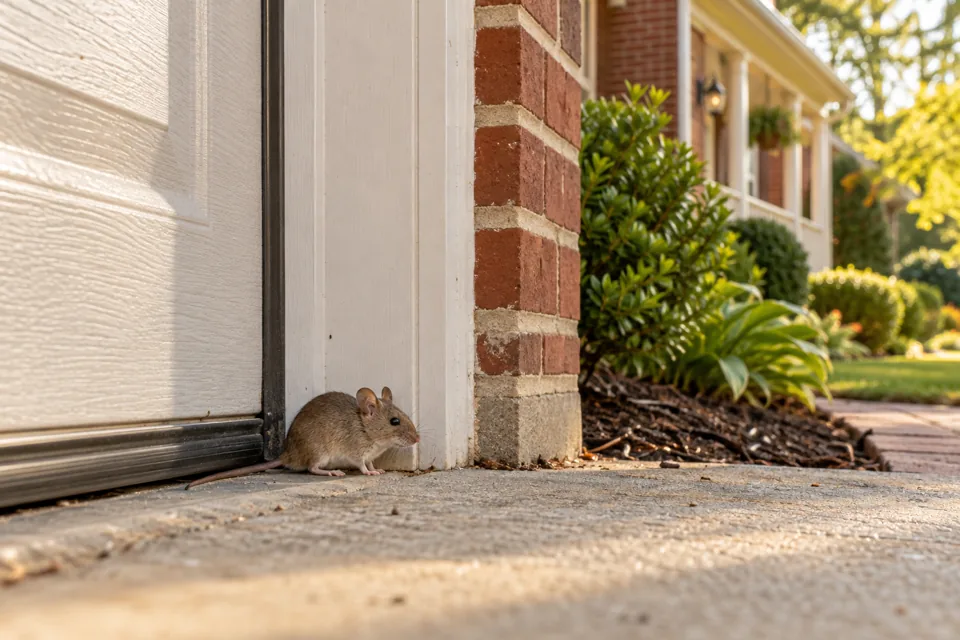
Roof rats, Norway rats, house mice and, in some areas, pack rats each travel and nest differently, so the plan depends on the species. Use Call Now to describe the noises, droppings or damage you found and you will be connected with an independent provider serving the Lynchburg area.
Rodents in Lynchburg: species and what each one does
| Rodent | Where it nests | How it gets in | Typical sign |
|---|---|---|---|
| House mouse | Walls, insulation, pantries and appliances | Squeezes through gaps near a quarter inch | Small droppings, shredded nesting, scratching in walls |
| Deer mouse and pack rat | Garages, sheds, stored boxes, vehicle engine bays | Gaps at garage doors and wall edges | Nests of sticks, cholla or trash, chewed wiring |
| Roof rat | Attics, rooflines, palms, dense shrubs | Climbs trees, fences and wires, then enters vents, soffits and roof tiles | Noises overhead at night, spindle-shaped droppings, rub marks along beams |
| Norway rat | Burrows by foundations, basements, crawl spaces | Digs along slabs and enters through low gaps, drains and pipe chases | Burrows, greasy runways and blunt droppings at ground level |
Signs of rodents in a house
- Nests of shredded paper, insulation or plant material
- Pet reactions to sounds, and an ammonia-like or musty odor
- Scratching, scurrying or gnawing in walls, ceilings and attics, usually at night
- Droppings along walls, in cabinets and in the attic
- Gnaw marks on wood, wires, pipes and food packaging
- Greasy rub marks along baseboards and rafters
Rodent control methods compared
| Method | How it works | Notes |
|---|---|---|
| Live traps and one-way doors | Capture or exit devices for specific cases | Local rules decide whether a rodent can be released. |
| Tamper-resistant bait stations | Locked stations outdoors holding rodenticide | Used outdoors and where regulation allows. |
| Sanitation and cleanup | Removing droppings, nesting and contaminated insulation | Reduces odor and prevents attraction. |
| Exclusion | Gaps sealed with hardware cloth, steel wool, copper mesh, sheet metal and sealant | Stops reentry and is the long-term fix. |
| Snap traps | Mechanical traps placed on travel lines | Immediate results with no poison in the structure. |
What the noises in the attic tell you
Heavier footsteps overhead after dusk usually suggest roof rats, because rats weigh more, while mice make lighter scratching and squeaking sounds. Noise during the day can indicate a large population or a different animal such as a squirrel. A provider works out the species from droppings, rub marks and entry points, not from sound alone.
How rodent control works from inspection to follow-up
Getting the sequence wrong ruins rodent work. Removing animals while leaving the gaps open only invites replacements, while closing the gaps first can trap a rodent in the walls. Good providers handle the steps in the right order.
- Inspection of the roofline, attic, soffits, vents, foundation, garage, crawl space and utility entries, looking for gnaw marks, rub marks, droppings, nests and runways.
- Identification of the species, because roof rats, Norway rats and house mice travel, nest and take bait differently.
- Trapping or baiting plan: snap traps placed on the travel lines, with tamper-resistant stations outside where rules allow.
- Exclusion: gaps larger than a quarter inch sealed with hardware cloth, steel wool, copper mesh, sheet metal or sealant, and vents and weep holes screened.
- Cleanup and repair recommendations for droppings, contaminated insulation and chewed wiring.
- Follow-up visits to remove traps, check the seals and confirm activity has stopped.
Questions to ask a rodent control provider
- Is cleanup of droppings and insulation part of the scope or separate?
- Which rodent do you think I have and what evidence points to it?
- How many visits are planned and what happens if activity continues?
- Will you use traps, bait or both, and where will each go?
- Do you show me photos of what you found and what you sealed?
Safety: droppings, nests, pets and children
Rodent droppings, urine and nesting material can carry germs and should be cleaned with care. The CDC and EPA advise ventilating the area, wearing gloves and a respirator rated for the job, wetting droppings with a disinfectant before wiping, and never sweeping or vacuuming them dry.
Pets and children need to stay out of the areas being worked on. Bait belongs only in tamper-resistant stations out of their reach and out of wildlife's reach, certain rodenticides are restricted in some states, and in those places most of the work is done by exclusion and trapping.
Common mistakes with rats and mice
- Setting a few traps in one place. Rodents follow edges and walls, and traps need to sit on those routes.
- Ignoring the roof and trees. Roof rats use branches, fences and power lines to reach attics.
- Using poison alone indoors. Poisoned rodents can die in walls, and bait does not close the entry points.
- Sealing before checking that all animals are out of the structure.
- Skipping cleanup. Remaining droppings and urine can draw new rodents.
What makes rodent control different in Lynchburg
Lynchburg sits on hills along the James River in central Virginia, with many older brick homes on crawl spaces and basements. Virginia has a warm, humid summer and mild winters that keep termites, ants and carpenter bees active for much of the year.
Subterranean termites are common in the region, and wood in contact with soil or damp crawl spaces raises the risk. Fall brings stink bugs and cluster flies to sunny walls, and mice and rats look for warm crawl spaces and attics. Ask the provider how these local conditions change where rodents nest, travel and enter at your address.
Rodent control across Lynchburg and nearby cities
In Lynchburg, Virginia, Pest Control Lynchburg VA serves ZIP codes: . Providers working in Forest, Madison Heights, Bedford, Amherst and Appomattox also receive calls and requests. Because each address is checked on its own, give your ZIP code when you call.
Use Call Now at the top of the page and describe the noises, droppings or damage you found. You will be connected with an independent provider who confirms the address, inspects the roofline and attic and gives you the scope in writing.
Related help in Lynchburg
If this is not quite your situation, these pages cover the neighboring questions: Ant control; Spider control; Cockroach control; Pest inspection. The service area list shows every nearby city and ZIP code covered.